The oldest place on Earth
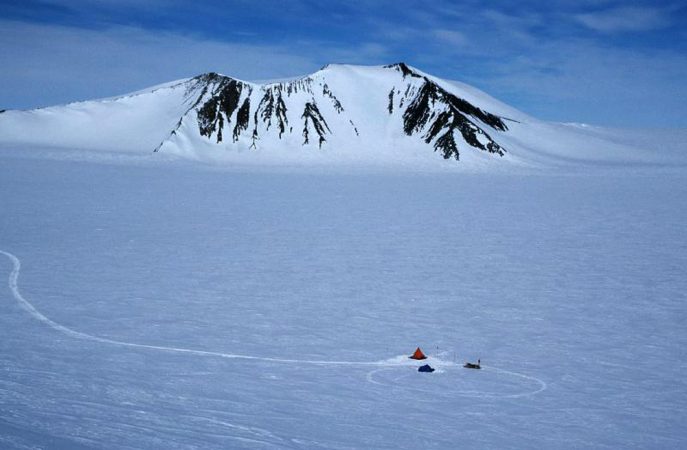
The Friis Hills in Antarctica are brain dead and dry, nothing but chafe and sand and boulders. The hills seat along a flattop mountain 60 kilometers from the coast. They are blasted by stale winds that shrieking off the Antarctic Ice Sheet 30 kilometers farther inland. The temperature present falls to -50° Anders Celsius during winter, and rarely climbs above -5° in summertime. But an unbelievable secret hides just below the surface. Adam Lewis and Allan Ashworth establish it the day a helicopter dropped them off in the rolling terrain.
They made the discovery hindermost in 2005. After scene up their tent in the tanning wind, the two scientists from ND State University in Fargo began digging around. They could dig only uncomplete a m down before their shovels hit dirt that was frozen solidified. Simply higher up the icy earth, in those acme few centimeters of crumbly dirt, they found something surprising.

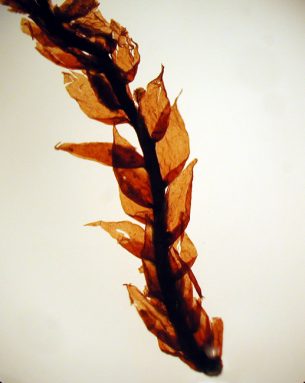
Their shovels turned up hundreds of dead beetles, wooden twigs, pieces of dehydrated moss and bits of other plants. These plants and bugs had been dead for 20 million years — or 4,000 times longer than the mummies of Egypt. But information technology seemed as if they had died only a few months earlier. The twigs snapped crisply in the scientists' fingers. And when they frame bits of the moss in water, the plants puffed up, soft and squishy, same tiny sponges. They looked like moss you power see growing beside a gurgling stream.
Ashworth and Lewis were interested in digging up these bits of ancient life because they discover how Antarctica's climate has changed over time. Scientists are also interested in Antarctica's nightlong-done for life because information technology provides clues to how Africa, Australia, South America and other continents have slowly shifted their positions over millions of years.
Buttercups and bushes
Antarctic continent today is barren and icy, with few living things other than sea-dwelling house seals, penguins and other birds that gather on the continent's shores. But the tattered bits of bugs and plants found by Sinclair Lewis and Ashworth show that it hasn't always been this way.
Twenty million years ago, the Friis Hills were covered in a carpet of cushiony, live moss — "very green," says Lewis. "The ground was mushy and boggy, and if you were walking close to you would have truly got your feet misty." Popping out through the moss were bushes and yellow flowers named buttercups.
In fact, Antarctica has been fairly warm — at least in the summertime — and bustling with life throughout most of its history. Forests of leafy trees once covered the land, including, probably, what is now the South Pole. And dinosaurs roamed the chaste, too. Eve after dinosaurs disappeared 65 million years ago, Antarctica's forests remained. Furry animals called marsupials that looked like rats or opossums still scurried around. And giant penguins almost as tall A professional basketball game players mingled on the beaches.
Finding signs of Antarctica's vanished life is challenging, though. Most of the Continent is covered in frost over to 4 kilometers thick — as deep as much of the reality's oceans! Soh scientists essential search in the few places, like the Friis Hills, where mountains biff their denudate, rocky faces above the ice.
Ashworth and Lewis had an inkling that they would find something in the hills before they even landed in that respect. A story told to them by retired geologist Noel Potter, Jr., had raised their hopes.
Potter had collected George Sand from the Friis Hills in the 1980s. When atomic number 2 looked at the sand through a microscope back in his lab at Dickinson College in University of Pennsylvania, he found what looked like tiny wisps of dried plants not much bigger than a grain of sand.
Potter's maiden thought was that some tobacco plant from the pipe He was smoking had fallen into the sand. Only when he put some of his tobacco plant under the microscope, information technology looked different from what helium had found in the Sand. Whatever that dried, shadowy stuff was, IT had to consume come from Antarctica — not his pipage. It was a mystery that Potter never forgot.
When Jerry Lee Lewis and Ashworth finally arrived at the Friis Hills, it took them only a couple of hours to find more of the ancient dried plants that Potter had first glimpsed 20 years earlier.
Elevator mountain
It's amazing that these delicate plants were preserved at all, says Lewis. The site where they Lie buried is a tiny island of rock surrounded by a sea of destruction. Rivers of ice 600 meters gelatinous have flowed around the Friis Hills for millions of years. Called glaciers, they press everything in their path.
But among this unfolding destruction, the mountain that the Friis Hills sit atop did something amazing: It rose equal an lift.
This lift happened because the glaciers flow just about the dozens were ripping away billions of gobs of rock and carrying it into the ocean. As the weight of that rock-and-roll was removed from around the heaps, the surface of the Earth sprang choke off. It rose, in slow gesture, like the Earth's surface of a trampoline from which you've abstracted a pile of rocks. The mountain rose to a lesser degree a millimeter p.a., but over millions of years, that added ascending to hundreds of meters! This little rafts platform raised to safety its fragile treasure above the rampaging glaciers.
For Lewis, it brings back memories of an old TV show in which explorers stumbled into a secret valley where dinosaurs still existed. "You know those old cartoons, The Land that Time Forgot? This really is that," he says. "You have this tiny core of an ancient landscape, and you lift it up, you make it selfsame cold, and it just sits there."
The cold and the dry kept the dead stuff from rotting. The lack of water also unbroken the remains from fossilizing — a process in which deadened things like leaves, woods and bones gradually temper into stone. So, bits of dry plants that are 20 one thousand thousand age old still puff up like SpongeBob when placed in water. And the Grant Wood still smokes if you try to light it on fire. "Information technology's thus alone," says Lewis — "so bizarre that it actually survived."
Ancient forests
Life in Antarctica has been roughly a lot longer than 20 million days, though. Paleontologists rich person determined forests turned to Lucy Stone, or petrified, on bare, rocky slopes in the Transantarctic Mountains, vindicatory 650 kilometers from the contemporary South Pole. Betwixt 200 and 300 one thousand thousand years ago, stands of trees grew busy 30 meters, A tall as a 9-story function building. Walk through and through indefinite of those old Leslie Richard Groves nowadays and you can see stacks of mineralized tree stumps still rooted in stone that once was muddy soil.
That petrified mire is untidy with the imprints of long, tightly fitting leaves. Scientists cerebrate that the ancient trees lost their leaves during the winter, when 24-hour wickedness fell along the forest for three Beaver State quatern months. But eve if it was dark, IT wasn't too cold for life. Trees growing today in Arctic forests are oftentimes damaged by winter freezing; the damage shows up in tree rings. Simply scientists don't see evidence of frost damage in the corner rings of the petrified stumps.
Scientists have recovered fossils of more plants and animals that lived in these Antarctic forests. Two of the fossils have helped remold our understanding of Earth's account. Same is from a tree known as Glossopteris with long, sharp leaves. The other fossil comes from a heavyset beast called Lystrosaurus. The size up of a large pig and barnacled in scales like a lounge lizard, this creature chomped connected plants with its beak and used omnipotent claws to prod burrows in the ground.
Scientists take unearthed Lystrosaurus bones in Antarctica, India and Confederate Africa. Glossopteris fossils are found in those same places, plus South America and Australia.
Ab initio, when you look the least bit those places where those fossils take in been constitute, "it doesn't make common sense," says Judd Case, a paleontologist at Eastern Washington University in Cheney. Those pieces of land are scattered crossways the globe, separated by oceans.
But those fossils helped lead geologists to a surprising conclusion in the 1960s and 70s.
"At approximately point these continents had to have been collectively," says Case. India, Africa, South America and Australia were once coupled to Antarctica like puzzle pieces. They blown a single huge southern continent called Gondwana. Lystrosaurus and Glossopteris lived on that continent. As India, Africa and other pieces of land broke away from Antarctica and drifted north unrivaled-by-one, they carried fossils with them. Geologists now refer to this movement of landmasses as continental drift.
Final breakup
Gondwana's breakup happened gradually. When dinosaurs roamed Earth between 200 million and 65 million years ago, some of them made their path to Antarctica across land bridges that still existed between continents. Later came the furry animals called marsupials.
Everyone knows marsupials; this group of animals includes the cute Australian critters, such as kangaroos and koalas, that sway their young in pouches. But marsupials didn't actually start out in Australia. They first arose in North America 90 1000000 years ago. They found their way to Australia by migrating down through South America and wandering crossways Antarctica, says Character. Helium has dug up plenty of pouched mammal skeletons in Antarctica. The untrained animals look a bit like modern-day opossums.
About 35 million years past, this cross-Europe itinerant came to an end when Antarctica separated from its last neighbor, South America. Ocean currents circled Antarctic continent, directly incomparable at the stern of the world. Those currents insulated it from warmer parts of the human beings the way that a Styrofoam ice chest of drawers keeps cool drinks from warming on a summer day.
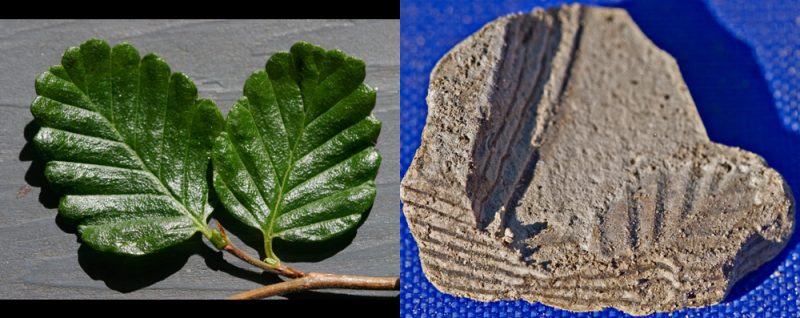
Eastern Samoa Antarctica's temperatures plunged into a deep freeze, its thousands of species of plants and animals died off over time. Those green meadows that Ashworth and Lewis found were one of life's last gasps before it was snuffed out by the cold. Twigs unearthed by the scientists belonged to southern beeches, a type of tree that stillness survives in Red-hot Zealand, Southerly America and other parts of the ancient supercontinent.
Last survivors
But even today Antarctica International Relations and Security Network't completely dead. Ride a plane ended its oceanic of white to a place where a nubbin of bare rock pokes out of the ice. Maybe that rock is atomic number 102 larger than a basketball court. Perhaps there isn't another bit of unfrozen rock for 50 to 100 kilometers in any direction. But climb onto the rock and find a crack where a light crust of green algae stains the dirt. Horn in up that crust.
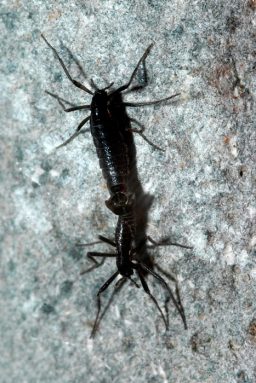
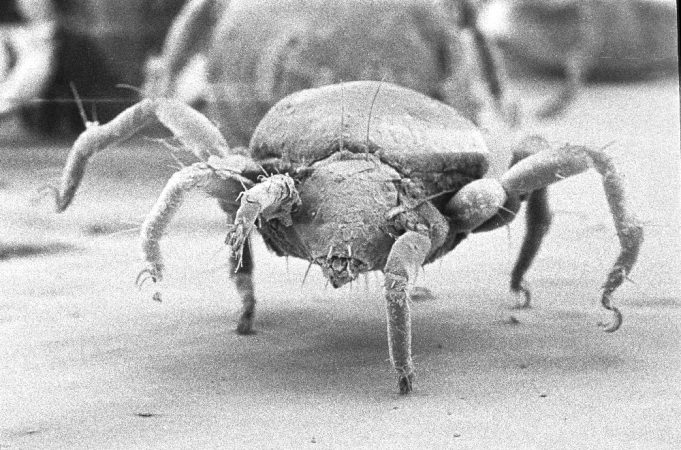
Underneath, you'll find a few creepy-crawly-crawlies: close to worms, tiny flies, six-legged critters called springtails operating theatre little animals called mites that have eight legs and are direct to ticks. One type of mite grows to a draw and quarter the size of a grain of Elmer Leopold Rice. Peter Convey, a polar ecologist with the British Antarctic Sketch in Cambridge, likes to call information technology the "elephant" of Antarctic continent's inland ecosystem — because it is one of the largest animals that live there! Some of the other creatures are smaller than a grain of salt.
These animals may spread by wind from one exposed peak to another. Or they may catch rides connected the feet of birds. "Our best guess is that most of the animals have been there for millions, if not tens of millions of long time," says Convey. A couple of species take over probably been residents of Antarctica since before it separated from the other continents.
During that time they had to survive many ice ages, when the ICE was yet thicker than nowadays and fewer peaks were unprotected. In those tumid times, even a single dusty stone fallen onto a glacier could rich person provided a temporary base for a a few lucky mites.
It's true that Antarctica is a harsh place. Just as Ashworth, Jerry Lee Lewis and Case get found, the signs of its vanished life have been slow to fade. And even now, a a few manlike animals hang on.
Power actor's line
alga Acellular organisms, once considered plants, that grow in water.
continent One of the seven largest bodies of land on Solid ground, which include North America, South America, Africa, Australia, Antarctica, Asia and EEC.
continental drift The slow movement of Earth's continents all over tens of millions of years.
ecosystem A community of organisms that interact with each other and with their physical environment.
glacier A river of jelled ice that flows tardily through a mountain valley, moving anywhere from a couple of centimeters to a few meters per sidereal day. The ice in a glacier is formed from snow that has been gradually compressed away its have weight.
GondwanaA supercontinent that existed in the southern hemisphere until about 150 billion years ago. It included what is like a sho South United States, Africa, Madagascar, Antarctica, Australia, New Zealand, Tasmania, India and parts of Southeast Asia.
glacial epoch A period, lasting tens of thousands of years, when Earthly concern's climate cooled and ice sheets and glaciers grew. Many an ice ages have occurred. The last one concluded or so 12,000 years agone.
ice sheet A large cap of glacial ice, hundreds or thousands of meters grumose, that can cover up many thousands of square kilometers. Greenland and Antarctic continent are almost entirely mud-beplastered by ice sheets.
Lystrosaurus An ancient herbivorous reptile that walked on four legs, weighed just about 100 kilograms and lived 200 to 250 million years agone — earlier the age of dinosaurs.
pouched mammal A typecast of furry mammal that feeds its young with Milk and usually carries its young in pouches. Most of the with child, native mammals in Australia are marsupials — including kangaroos, wallabies, koalas, opossums and Australian state devils.
microscope A piece of laboratory equipment for looking at things that are too small to see with the naked eyeball.
mite A tiny spider congeneric that has Ashcan School legs. Many mites are so small that they can't be seen without a microscope or simple microscope.
moss A case of simple plant — without leaves or flowers Oregon seeds — that grows in wet places.
springtail A group of six-legged animals distantly related to insects.
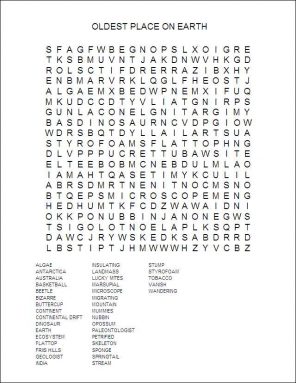
Countersign Observe ( cluck here to print puzzle )
0 Response to "The oldest place on Earth"
Post a Comment